

Author name: vahashmi63

Blogs

The Tongue of Fire and the Crown of Honor: Trump’s Pentagon Rhetoric Through a South Asian Lens

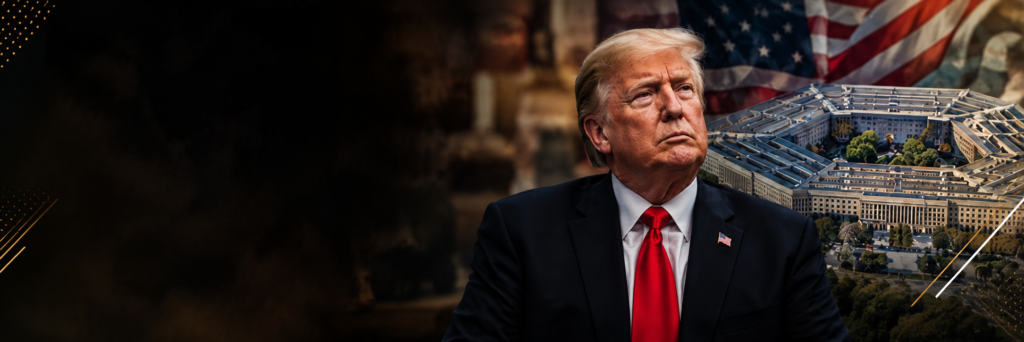
Physical wars are fought with guns, but they are ignited by words. Long before the first missile is fueled or the first boot hits the ground, a conflict must be spoken into existence. Words provide the architecture for violence—they shape the justifications, manufacture the consent, and summon the animosity required to move nations to slaughter. Yet, because words feel weightless to the person speaking them, those who deploy them often forget their catastrophic gravity. A masterclass in this dangerous disconnect took place at the Pentagon during the 25th anniversary of the September 11 terrorist attacks. President Donald Trump treated a sacred monument of national mourning as a transactional political stage, seamlessly retrofitting the memories of 2001 to justify his current, highly polarizing war in Iran. To fully dissect the hubris, casualism, and long-term fallout of this moment, we have to look outside the sterile vocabulary of Western political science. Instead, the crisis is best understood through the brilliant, double-edged lens of Indo-Pak linguistic folklore, where centuries of street wisdom perfectly map the anatomy of verbal arson. I. The Anatomy of Verbal Arson: The Lolo and the Chandia In the vernacular of South Asia, an enduring proverb warns of the vast distance between an instigating word and its physical consequence: “Lolo chal ke ruk jati hai, chandia ki shamat ati hai.” “The tongue delivers its swift blow and steps away, but it is the crown of the head that bears the ruin.” In this linguistic ecosystem, the “Lolo” represents the tongue—agile, slippery, and capable of moving at a moment’s notice before retreating into safety. Opposing it is the “Chandia,” the crown of the human head. In Indo-Pak culture, the head is not merely an anatomical structure; it is the ultimate seat of a person’s izzat (social honor), intellect, and dignity. To strike the chandia is to destroy a person’s prestige. Trump has long been a leader obsessed with verbal dominance—a chronic loose talker who treats language not as a solemn contract, but as a fleeting instrument of provocation. At the Pentagon, his Lolo was hyperactive. By explicitly declaring that his administration’s six-month-old military campaign againstIran inherits the “sacred oath” sworn a quarter-century ago, Trump fired off a massive, highly questionable historical rewriting. The tongue spoke with immediate, uncalculated bravado (“There can only be victory…”) and then stepped back. But the long-term trauma of that sentence lands squarely on the chandia—the collective intellect and global prestige of the United States. By exploiting a national tragedy to serve as a recruitment poster for an active war, Trump’s casualism deeply degraded the institutional honor of the presidency, leaving the nation’s reputation to absorb the blow of political opportunism. II. The Asymmetric Humiliation: When the Juta Lands on the Head When a leader ignores the weight of his words, reality has a brutal way of correcting the record. This brings us to a secondary, much harsher regional phrase: “Sar pe juty parna” “To be struck on the head with a shoe.” In South Asian society, the shoe belongs on the dirt of the feet. Tapping or striking someone on the crown of the head with a shoe is the absolute zenith of regrettable, public insult. It is a gesture designed to completely strip an adversary of their standing, forcing them into a state of total humiliation. The Western Rhetoric The Proverbial Reality Trump projects unmatched American military might and promises swift, absolute victory on the global stage. Iran uses asymmetric, low-cost drone and missile tactics to inflict continuous, costly attrition on U.S. forces. The administration frames the conflict as a clean, controlled containment strategy. 820+ wounded and 18 dead U.S. troops shatter the narrative, acting as a direct, public blow to national prestige. On paper, Iran is a minor power compared to the unmatched, multi-trillion-dollar military apparatus of the United States. Yet, the reality of the current war has flipped the traditional geopolitical hierarchy upside down. Despite the administration’s confident rhetoric, the Pentagon’s own updated data reveals that over 820 American troops have been wounded and 18 killed in action. Every time a low-cost Iranian drone or proxy missile forces a massive American warship or high-tech airbase into a defensive crouch, it acts precisely like that juta landing on the superpower’s head. It is a grinding, embarrassing trauma. By driving global oil prices past $100 a barrel and disrupting critical shipping lanes, a relatively small power has successfully dragged a giant into a chaotic mud-fight, dealing a severe blow to the strategic intellect—the chandia—of the United States. The Takeaway: Casual Words, Catastrophic Fallout When the dust settles on the Pentagon event, the synthesis of Trump’s rhetorical style remains deeply alarming. Because physical wars are fought by guns but ignited by words, a commander-in-chief’s language must be handled like loaded artillery. Instead, Trump’s ill-timed, irrelevant pivot to the Iran war exposed the core flaw of a leader who speaks first and calculates the implications later. His swift, unfiltered tongue (Lolo) continues to light fires for immediate political applause. But as the asymmetric, human costs of this war mount, it is the collective head of the American superpower (Chandia) that is left entirely exposed—forced to endure the ultimate humiliation of a smaller adversary dictating the terms of engagement (sar pe juty parna). He spoke the words casually, but the crown of the nation bears the scar.
Articles

The Genesis of Composite Culture

1. The Core Philosophy of Composite Culture A composite culture is an organic, shared way of life born from the blending of diverse religious, ethnic, and regional traditions into a unified social fabric. Rather than forcing minority groups to assimilate into a single dominant identity (a ‘melting pot’), a composite culture operates like a ‘salad bowl.’ Different communities coexist side-by-side, maintaining their unique distinctiveness while interacting intensely to form a shared heritage. This foundational socio-cultural reality is anchored by several universal values: • Syncretism: The active merging and cross-pollination of customs, philosophies, and worldviews. • Pluralism: The active recognition, preservation, and celebration of diverse cultural identities within one society. • Mutual Respect: The social honoring of distinct holy spaces, rituals, and seasonal festivals across communities. • Inclusivity and Fraternity: The cultivation of deep civic brotherhood that bridges sectarian gaps through everyday common ground. 2. The ‘Master Idea’ That Mothered Secularism While Western secularism emerged mechanically out of a strict political separation between church and state, non-Western secular models—most notably India’s—grew organically out of its pre-existing composite culture. In highly religious societies, a clinical, top-down banishment of faith from public spaces cannot easily succeed. True political harmony requires an underlying social contract to anchor it. Composite culture served as that exact emotional and experiential contract through centuries of lived daily syncretism. When modern democratic states institutionalized secularism, they did not design it to eliminate religion; they designed it as a protective legal framework engineered to keep the pre-existing composite culture alive. Thus, composite culture acts as the mother theory—the lived social reality—while secularism is its protective political offspring. 3. The Grassroots Architects: Sufi, Folk, and Bhakti Intercourse Long before kings and emperors codified these values into imperial policy, the genuine groundwork for South Asia’s composite culture (famously localized as Ganga-Jamuni Tehzeeb) was carved out by wandering mystics and folk poets at the grassroots level. The Sufi Influence: Mystics such as Khwaja Moinuddin Chishti, Baba Farid, and Hazrat Nizamuddin Auliya preached the core doctrine of Wahdat-al-Wujud (the Unity of Being). They taught that the divineessence permeates all creation, bypassing rigid dogmatic labels. Sufi poetry and musical gatherings (Qawwali) actively integrated local metaphors, traditions, and musical modes, drawing large crowds of both Muslims and Hindus to their shrines. The Bhakti Influence: Parallelly, ecstatic radical poets like Kabir, Guru Nanak, and Mirabai challenged orthodox boundaries from within. Kabir’s punchy, colloquial verse openly mocked the elitism and hypocrisy of both the Brahmin priests and the Islamic clerics (Mullahs), pointing instead to a single internal truth. Folk poetry utilized universal themes of love, longing, and agricultural life, using vernacular languages to dissolve social hierarchies and weave a shared spiritual ecosystem. 4. Emperor Akbar’s Statecraft: Institutionalizing Harmony Emperor Akbar did not invent India’s composite culture, but he was its most brilliant political architect. Recognizing that an expansive, multi-religious empire could not be sustained by military coercion alone, he turned a decentralized social reality into formal imperial statecraft through targeted institutional reforms: • Sulh-i-Kul (Universal Peace): Akbar codified tolerance into a foundational constitutional policy, establishing that the Mughal state must treat all religious beliefs impartially, ensuring absolute civil equality . • Abolition of Discriminatory Taxes: He repealed the highly unpopular Jizya tax on non-Muslims as well as the long-standing Hindu pilgrimage taxes, fundamentally leveling civic rights. • Structural Diversity: He decentralized administrative power by bringing regional Hindu elites—particularly the Rajputs like Raja Man Singh and financial geniuses like Raja Todar Mal—into the absolute highest echelons of imperial military and civil governance. • The Ibadat Khana (1575): Akbar built the House of Worship at Fatehpur Sikri as a safe physical sanctuary for multi-faith dialogue. Here, scholars of Islam, Hinduism, Jainism, Christianity, and Zoroastrianism gathered to debate metaphysics, attempting a grand synchronization of philosophical ideas. 5. The Tactical Overreach: From Politics to Prophecy Despite his grand vision, Akbar’s governance hit a deep psychological and political paradox when he attempted to step across the boundary separating an enlightened statesman from a spiritual prophet. Frustrated by the stubborn intolerance and bitter infighting among religious clerics inside the Ibadat Khana, Akbar concluded that no single orthodox tradition held an exclusive monopoly on truth. He closed the chamber, but instead of focusing purely on a shared civic culture, he attempted to synthesize a personal moral order. In 1582, he introduced Din-i-Ilahi (The Divine Faith). Mechanically, it was an artificial moral code rather than a full religion; it lacked a coherent theology, a holy text, or any rich narrative mythology. By framing his inclusive values inside the terminology, ritual structures, and titles of a brand-new spiritual order centered directly on his own persona, he made a critical psychological error. He had a highly practical, successful path immediately before him: promoting Sulh-i-Kul strictly as a neutral, shared civic culture. By ‘religionizing’ a cultural theory, he alienated the very people he wished to unite. This step was widely perceived not as a grand umbrella of unity, but as a direct existential stance against existing traditions, resulting in deep suspicion from all sides. 6. The Architecture of Resistance: Orthodoxy and Opposition The institutionalization of Din-i-Ilahi and Akbar’s personal syncretic practices faced intense pushback from both Muslim and Hindu orthodox strongholds, highlighting the dangers of trying to orchestrate an artificial state-sponsored faith from an imperial throne: Islamic Orthodox Backlash: Leading the fierce religious opposition was the highly influential Naqshbandi Sufi scholar, Shaikh Ahmad Sirhindi. Sirhindi vehemently accused Akbar of abandoning the fundamental tenets of orthodox Islam and corrupting the Islamic character of the empire. He criticized the court’s equal patronage of non-Muslims and wrote extensive letters to Mughal nobles to systematically counter Akbar’s syncretic policies. Concurrently, the conservative court historian Abdul Qadir Badayuni privately documented bitter critiques, framing Din-i-Ilahi as a monument of supreme hubris and a direct threat to religious order. Hindu Elite Resistance: The Hindu aristocracy viewed the imperial spiritual experiment with equal caution and deep suspicion. When Akbar warmly invited his most loyal general and advisor, Raja Man Singh, to join the inner circle of

Blogs

Strategic Pivot: The U.S.–Israel–Iran Conflict and the New Geopolitical Reality

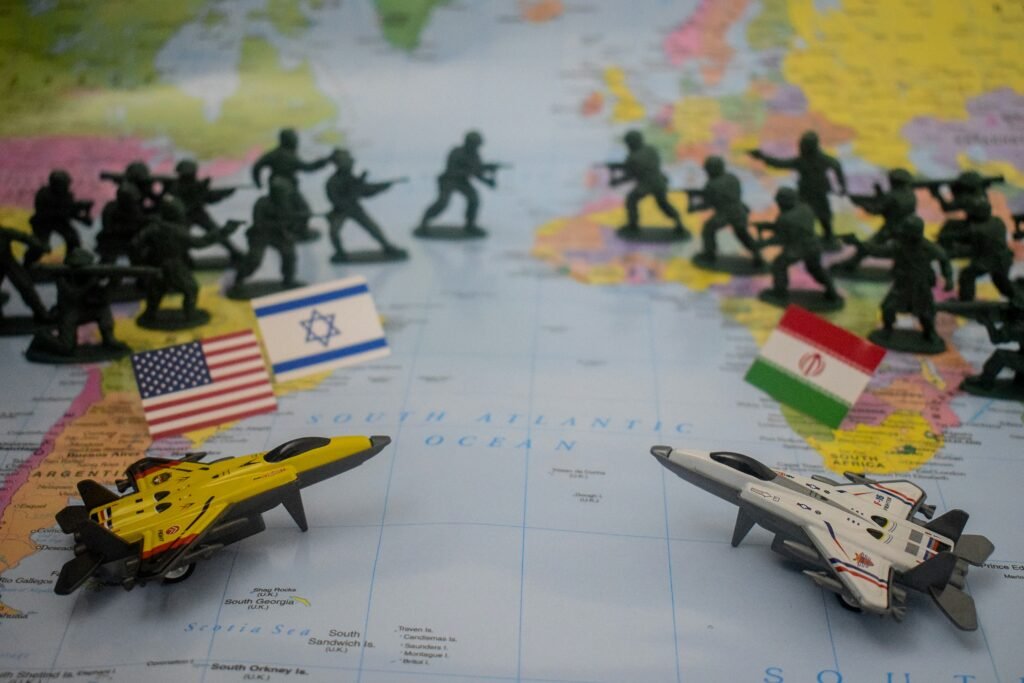
Strategic Pivot: The U.S.–Israel–Iran Conflict and the New Geopolitical Reality Narrative Introduction: The Fracture of the Status Quo The sirens slicing through the midnight air at the Muwaffaq Salti Airbase in Jordan signaled more than an impending artillery impact; they broadcast the expiration of a decades-old geopolitical playbook. On February 28, 2026, a massive joint assault by United States and Israeli forces aimed to strip Tehran of its regional command hubs and dismantle its strategic infrastructure. Operating on an ‘air-power bias,’ Western military planners assumed that rapid, high-tech strikes would collapse the regime’s command structures and force immediate capitulation. Instead, the opening salvo shattered the illusion of an easy, automated victory. Far from cowering under the weight of Western air superiority, Iran absorbed the shockwaves, rapidly consolidated its leadership, and unleashed a highly decentralized, relentless wave of counter-offensives across the Middle East. The rules of ‘restrained defense’ have been permanently overwritten. This briefing traces the unfolding realities of a conflict where strategic miscalculation has placed Tehran in the driving seat of an entirely new era of preemptive warfare. Phase 1: The Doctrinal Shift – From Restrained Defense to Preemptive Offense For years, the Islamic Republic of Iran operated under a framework of calculated asymmetry. Its defense posture was deliberately reactive: absorbing external strikes and delivering carefully calibrated, managed responses designed to impose costs on the United States and Israel without triggering an unmanageable all-out war. This traditional strategy has officially ended. Following the severe escalation of hostilities, the Iranian Army’s leadership and the Supreme National Security Council (SNSC) formally declared Iran’s transition to an offensive and preemptive military doctrine. The practical parameters of this shift are defined by three major adjustments to the Iranian command matrix: • Preemptive Engagement: Emboldened by newly tested weapon platforms like the solid-fueled Qassem Basir ballistic missile, Tehran has explicitly stated it will now take military action against perceived threats before they are fully realized. • Asymmetric Scaling: Future responses will no longer be limited to the geographic scale or intensity of the incoming strike. Any aggression will face a faster, broader, and more destructive counter-offensive. • Command Integration: The structural merging of regional Islamic Revolutionary Guard Corps (IRGC) branches with the broader Armed Forces General Staff allows Tehran to bypass bureaucratic bottlenecks, executing immediate long-range strikes. Phase 2: The Theatre of War – Why the Middle East and South Asia Dictate Global Power To understand why this doctrinal shift has paralyzed Western military planning, one must look past standard geographic dimensions. In modern conflict, power is determined by connectivity and vulnerability, placing the Middle East and South Asia at the core of global geopolitics. The Chokepoints of Global Commerce: Modern globalization is tied directly to thin maritime lanes. The Middle East and South Asia control the ultimate global transit corridors, specifically the Strait of Hormuz, the Bab al-Mandeb Strait/Red Sea, and the Indian Ocean transit lanes. When the IRGC deploys anti-ship ballistic missiles or mines in the Strait of Hormuz, global shipping lanes freeze. If these arteries are constricted, the economic shockwaves manifest as instant energy price spikes and systemic inflation in Washington, London, Beijing, and Tokyo. The Extraction of Civilizational and Spiritual Leverages: This dual-region footprint functions as the historical and emotional engine room for human civilization, serving as the birthplaces of the world’s major Abrahamic and Indic religions. Because billions of people globally maintain deep spiritual connections to cities like Jerusalem, Mecca, or Varanasi, localized military actions here trigger instantaneous socio-political shockwaves worldwide, making local skirmishes deeply international. Colonial Legacies and Civilizational Pride: Unlike regions operating on modern, post-nationalist economic frameworks, states such as Iran, India, and Turkey are driven by unbroken civilizational memories spanning thousands of years. They operate on historical pride and existential survival rather than transactional diplomacy. This deep-seated nationalism is constantly agitated by artificial, colonial-era lines—such as the Sykes-Picot Agreement and the Radcliffe Line—which sliced seamlessly through ancient ethnic and tribal boundaries, making the territory a permanent flashpoint for unresolved conflict. Phase 3: The Descriptive Analysis – Strategic Reassessments and Debates 1. Western Intelligence and the Illusion of Planning Geopolitical commentators increasingly argue that the U.S.–Israeli campaign was launched on a foundation of erroneous assumptions, operational overconfidence, and an arrogant underestimation of Iran’s deeply institutionalized defense matrix. This perspective suggests that Western political and military leadership substituted technological hubris for accurate intelligence, genuinely believing that a localized campaign of heavy airstrikes would cause immediate regime capitulation. Mainstream defense analysts are converging on this assessment, pointing out that an ‘illusion of control’ has fractured Western strategic objectives. U.S. and Israeli planners misread internal socio-political dissent within Iran as a sign of structural fragility, failing to anticipate how quickly foreign bombardment would trigger a ‘rally around the flag’ effect, solidifying the authority of the regime’s hard-line leadership. 2. The Gulf States and the Strategic Shield A core pillar of Iran’s revised offensive doctrine relies on the complete pacification of its immediate neighbors. Geopolitical commentary indicates that Tehran’s precision missile and drone swarms have successfully paralyzed the regional operational footprint of the U.S. military by completely neutralizing wealthy Gulf allies like Saudi Arabia and the United Arab Emirates (UAE). From this viewpoint, these oil-producing states now recognize that allowing their soil to be used as a staging ground for U.S. Central Command (CENTCOM) operations represents a direct, existential threat to their infrastructure, forcing them into a posture of survivalist neutrality. Current deployment tracking confirms this reality, identifying it as a highly effective asymmetric leverage campaign. Having witnessed the absolute vulnerability of fixed radar arrays and energy infrastructure to saturation drone strikes, the Gulf States have systematically restricted U.S. forces from launching offensive sorties from their territory. This diplomatic insulation provides Iran with a vital geographic shield. 3. The Nature of Iran’s Nuclear Leverage A critical point of strategic debate centers on what exactly underwrites Iran’s unwavering, straightforward willingness to challenge Western naval power. Emerging geopolitical analysis posits that Iran’s unwavering confidence stems from its mastery of functional nuclear weapons, acting

Scroll to Top
This site is registered on wpml.org as a development site. Switch to a production site key to remove this banner.